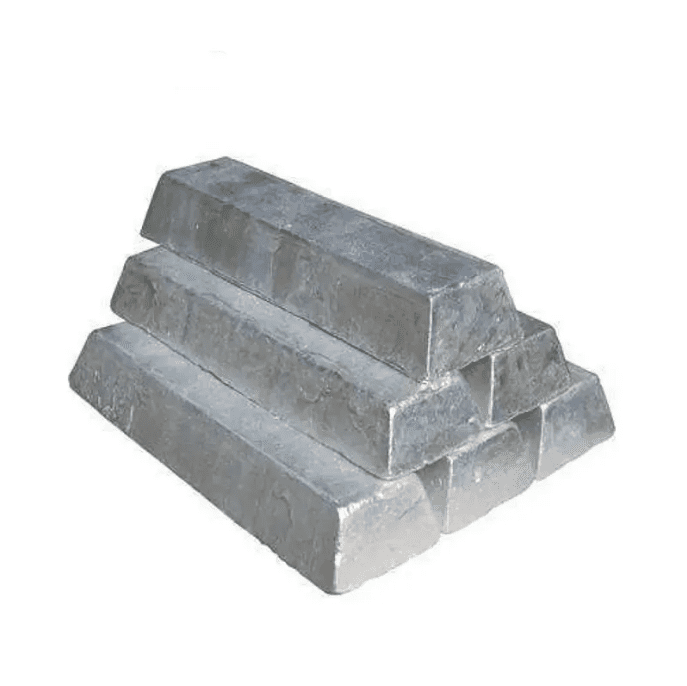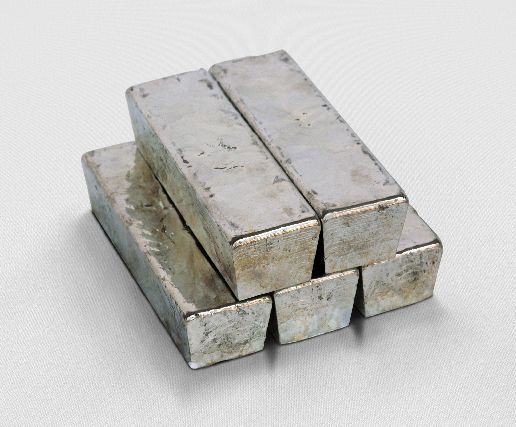
Magnesium Ingot
Magnesium ingot is a form in which magnesium metal is solidified by melting and casting into a specific shape or size. It is usually produced for industrial use and can be obtained in different forms. These ingots are often used in casting processes, production of alloys and industrial applications.

Introduction
Magnesium ingot is a type of metallic product composed of pure magnesium or magnesium alloys, primarily consisting of magnesium (Mg). It is also known as “Mg ingot.” This metal is relatively lightweight, with magnesium primarily occurring in the earth’s crust as magnesium mineral resources. With the continuous advancement of industry and technology, the applications of magnesium ingot have become increasingly widespread, finding significant use in aerospace, automotive manufacturing, electronics, and other fields. Additionally, magnesium ingot is an important strategic resource; pure magnesium ingots are typically used in the production of rockets, aircraft, missiles, and other high-tech products.
Key Properties and Uses
Alloy Production
Steelmaking
They are used in steelmaking processes, particularly for desulfurization, a process that removes sulfur from molten stee
Aerospace and Military Industries
The unique properties of magnesium make it valuable in the aerospace and military sectors for applications where weight reduction and strength are critical
Other Applications
Magnesium ingots are also used in the production of aluminum alloys, in chemical processing, and in the manufacturing of various components in the 3C industry (computer, communication, and consumer electronics
What Is Magnesium Ingot?
Magnesium ingot contains a rich amount of magnesium, which has an atomic number of 12 and an atomic weight of 24.31. It appears as a silver-white block and exhibits a shiny surface at room temperature. Magnesium ingot is characterized by its low density, high strength, corrosion resistance, and good electrical and thermal conductivity. The primary raw materials for magnesium ingot are magnesium ores, mainly including magnesium sulfate ores and dolomite. Before producing magnesium ingot, the magnesium ores must undergo crushing, grinding, and leaching processes. Currently, manufacturers primarily produce magnesium ingot using pyrometallurgical and electrochemical methods. During the smelting process, the molten magnesium metal must also be purified, cast, and heat-treated. Finally, the smelted magnesium liquid is poured into molds, where it cools to produce the finished magnesium ingot.
| Brand name | Mg≥ | Impurity content (Mass fraction,≦)% | ||||||
| Fe | Si | Ni | Cu | AL | Mn | others | ||
| Mg9999 | 99.99 | 0.002 | 0.002 | 0.0003 | 0.0003 | 0.002 | 0.002 | 0.003 |
| Mg9998 | 99.98 | 0.002 | 0.003 | 0.0005 | 0.0005 | 0.004 | 0.002 | 0.005 |
| Mg9995A | 99.95 | 0.003 | 0.006 | 0.001 | 0.002 | 0.01 | 0.006 | 0.005 |
| Mg9995B | 99.95 | 0.005 | 0.015 | 0.001 | 0.002 | 0.01 | 0.015 | 0.01 |
| Mg9990 | 99.90 | 0.04 | 0.03 | 0.001 | 0.004 | 0.02 | 0.03 | 0.01 |
| Mg9980 | 99.80 | 0.05 | 0.05 | 0.002 | 0.02 | 0.05 | 0.05 | 0.05 |
Contact us now!
We have deep deposition in the knowledge of battery component, metals, ceramic, metallurgy and refractories